
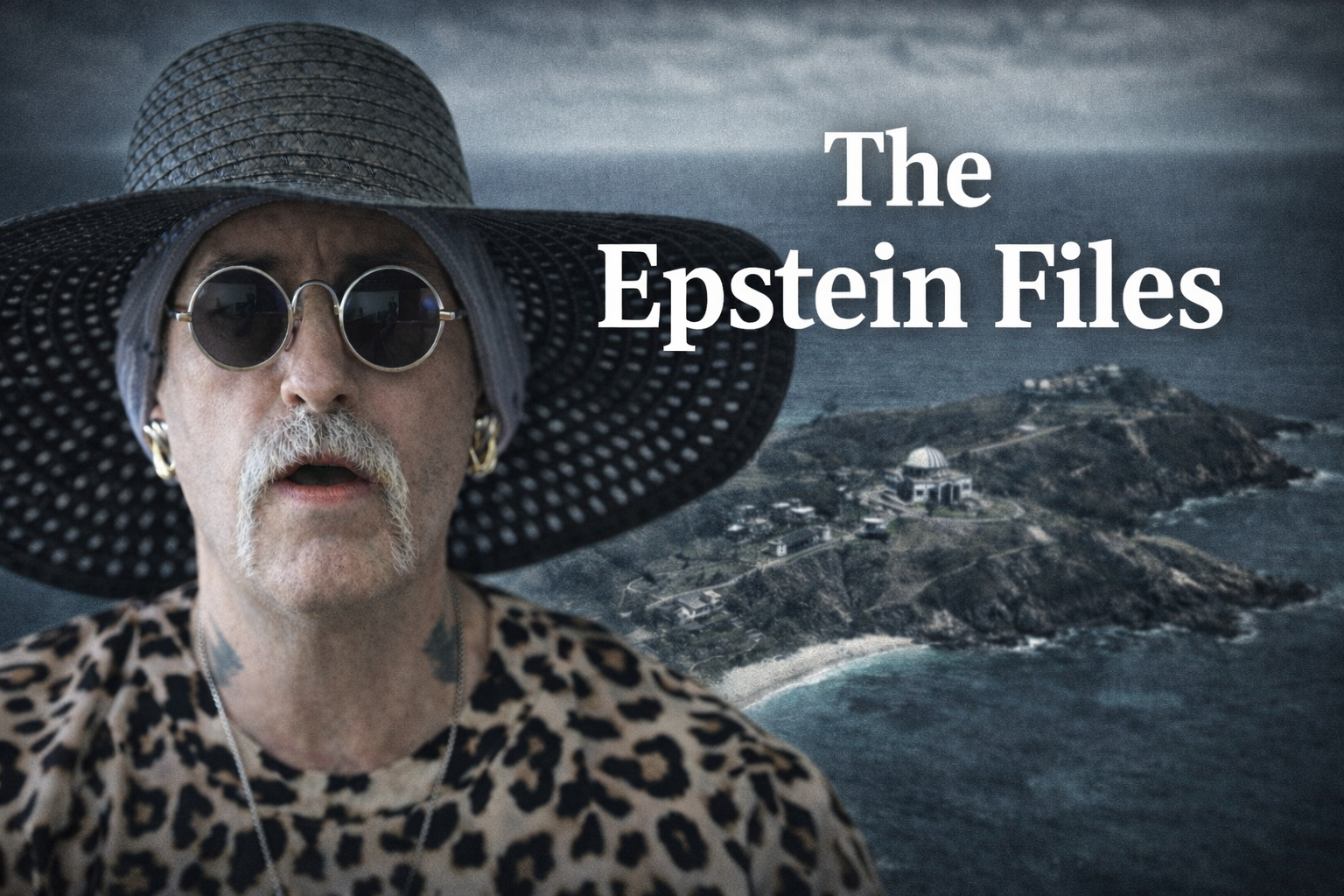
3.5 million new documents in the Epstein case have been released.
Millions of pages.
Thousands of names.
Countless allegations.
And in the end, the U.S. justice system says:
No new indictments.
For many, this is the final proof that elites are untouchable.
That power protects.
That the system is broken.
That’s true.
But not for the reason many believe.
A ergänzendes Videostatement zur Veröffentlichung der Epstein-Akten wurde separat veröffentlicht und vertieft die rechtlichen Hintergründe und strukturellen Zusammenhänge.
What was actually released
The new Epstein files are not a clean, curated final report.
No perpetrator list.
No legally actionable overall picture.
What is now public are primarily raw materials:
Emails from Epstein’s possession.
Internal FBI memos.
Tips from hotlines.
Anonymous accusations.
Unverified statements.
That is exactly why so many big names appear there.
Not because they were convicted.
But because even the vaguest allegation is initially documented.
That is investigative reality.
Not a verdict of guilt.
Why a name in a file is not guilt
This point is uncomfortable, but central.
Law enforcement does not operate on Twitter logic.
Not on outrage.
Not on gut feeling.
To bring charges, it requires:
verifiable evidence
credible witness testimony
connections that hold up in court
Many of the allegations in the files come from anonymous tipsters.
With no way to follow up.
No witnesses.
No verifiable details.
Such tips are stored.
But they are not sufficient for prosecution.
This is not protection of the powerful.
This is the rule of law.
Why the publication still changes nothing
One point is almost always overlooked:
For the public, these files are new.
For the authorities, they are not.
The FBI and the U.S. Department of Justice have known large parts of this material for years.
In some cases, for more than half a decade.
If there had been sufficient evidence, indictments
would have happened long ago.
Not now.
Not only after the publication.
That nothing is happening is not due to a lack of will in 2026.
But to a lack of evidence in the years before.
Why these files are still so explosive
The real impact is not in the allegations.
But in the connections.
The emails show something that can no longer be dismissed:
Epstein was not an isolated offender.
Not a fringe figure.
He was right in the middle of it.
In political circles.
In business networks.
In the social establishment.
And many of these connections continued,
even after Epstein was convicted in 2008.
That is the real scandal.
Not who was ultimately found guilty.
But who continued to be welcomed despite it all.
Why the state is disclosing everything this time
Normally, investigative authorities would never publish such materials.
Making unverified allegations public is dangerous.
For the accused.
For the rule of law.
In the Epstein case, this principle was abandoned.
Why?
Because trust is gone.
The lenient sentence in 2008.
Years of protection.
Special treatment.
And finally Epstein’s death in pretrial detention in 2019.
Too many failures.
Too many questions.
Too few answers.
The political pressure became so great
that transparency mattered more than restraint.
Not because everything is true.
But because no one believes anymore
that anything would otherwise ever be properly addressed.
Transparency without consequences
The Epstein files deliver no justice.
They deliver no final guilty verdicts.
They deliver no legal closure.
But they deliver something else:
A merciless picture of a system
in which proximity protects.
In which power creates networks.
And in which moral failure often remains below the threshold of criminal liability.
That is hard to endure.
Because there is no simple solution.
No happy ending.
No big round of applause.
Conclusion
The Epstein scandal is not a legal thriller.
It is a systemic scandal.
Not because no one is being charged.
But because too many looked away for too long.
The files do not answer all questions.
But they strip away one illusion.
The illusion
that truth automatically has consequences.
Now everything is on the table.
What we do with it
is no longer a legal question.
It is a political one.
In Marla We Trust.
📚 Further Reading – Partner Links
(Affiliate notice: The following links are partner links. If you make a purchase through them, you support Marlas Army at no additional cost to you.)
1. Hannah Arendt – On Violence
1. Hannah Arendt – On Violence
An analysis of the mechanisms of political control and public fear.
👉 https://amzn.to/3NDc0c8
2. George Orwell – 1984
The classic work on language control, truth, and surveillance.
👉 https://amzn.to/4bsO0SZ
3. Timothy Snyder – On Tyranny
Twenty lessons on how democracies die.
👉 https://amzn.to/3NcdiuI
Leave a Reply